Lidar Aerial Site Mapping for Land Development in Kenya
Aerial site mapping provides land developers and civil engineers with high-resolution topographical data required for accurate infrastructure planning across Kenya.
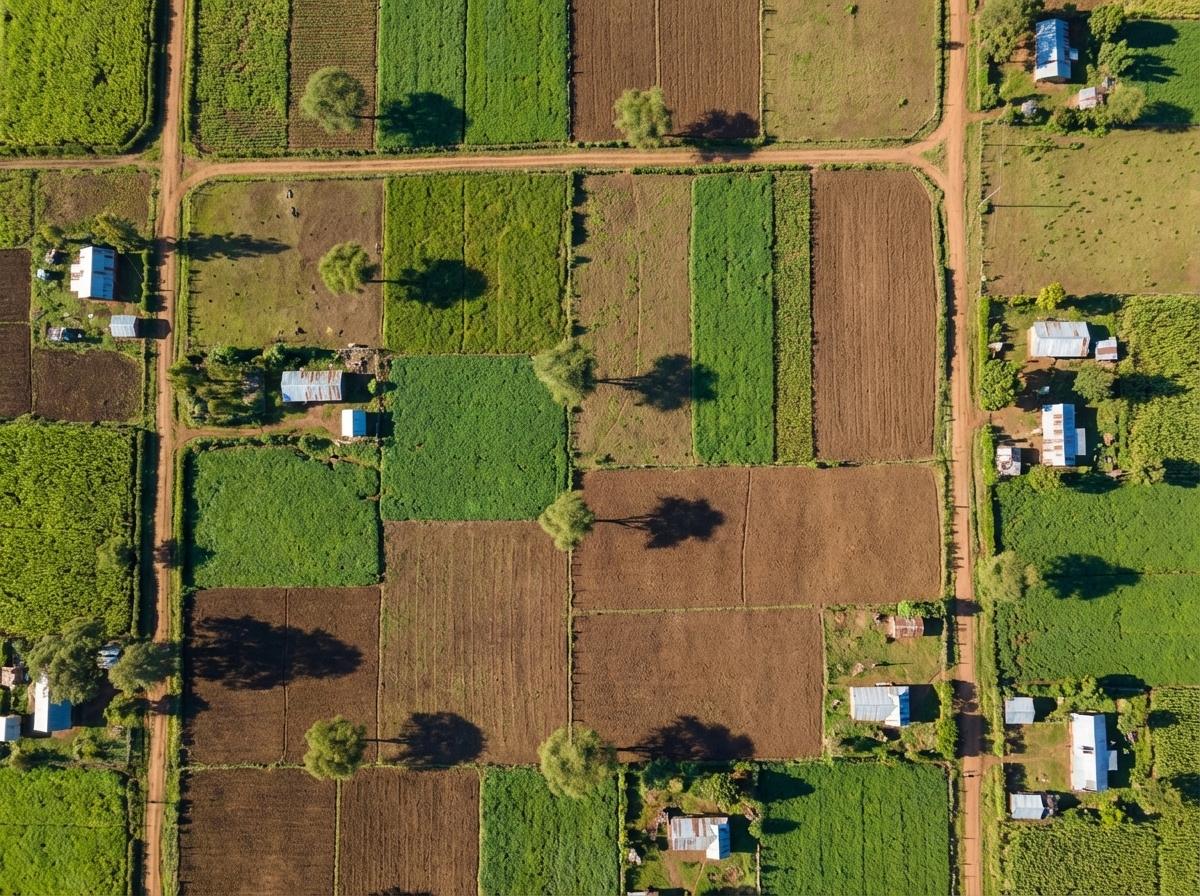
Deploying commercial drones equipped with advanced sensors allows project managers to bypass the lengthy timelines and physical limitations of traditional ground surveying in challenging Kenyan terrains through Photoshoot Kenya.
- High-resolution orthomosaic maps provide definitive boundary verification and site planning.
- Digital Elevation Models (DEM) allow for precise earthworks and volumetric estimations.
- Dense 3D point clouds facilitate structural assessment and detailed contour analysis.
- Vegetation-penetrating Lidar datasets offer true ground-level elevation mapping for dense areas.
Topographical Data Acquisition for Modern Kenyan Construction Projects
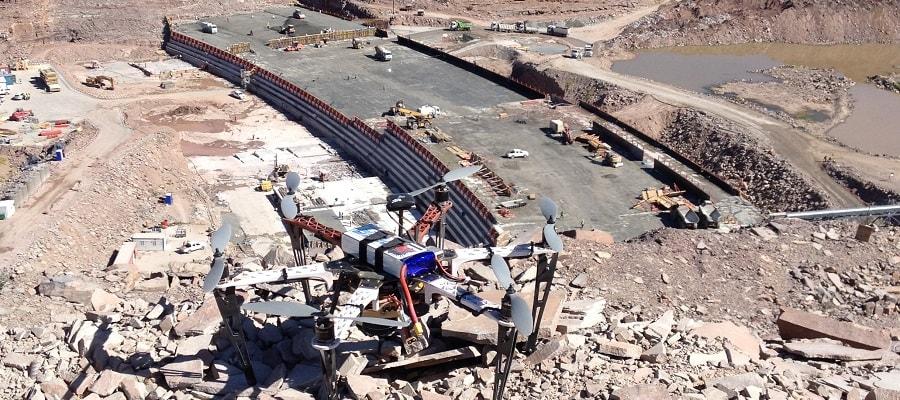
Modern construction projects require millimetre-accurate spatial data before earthmovers arrive on site. Engineering teams utilise drone-based surveying to generate comprehensive digital twins of uncultivated land plots, proposed highway routes, and large-scale residential developments.
Capturing millions of data points from the air eliminates the blind spots typically associated with manual ground-level transit surveys. Professional commercial photography Kenya teams provide the technical expertise required for these data-driven missions.
Project managers rely on this aerial intelligence to detect severe elevation changes and natural drainage patterns early in the planning phase. Identifying these topographical realities prior to breaking ground prevents costly redesigns and delays during the actual construction phase.
Surveyors operate RTK-enabled (Real-Time Kinematic) drones to lock positional accuracy down to the centimetre, ensuring alignment with existing national grid coordinates in regions like Nairobi.
Lidar Precision for Kenyan Terrain and Heavy Vegetation Mapping
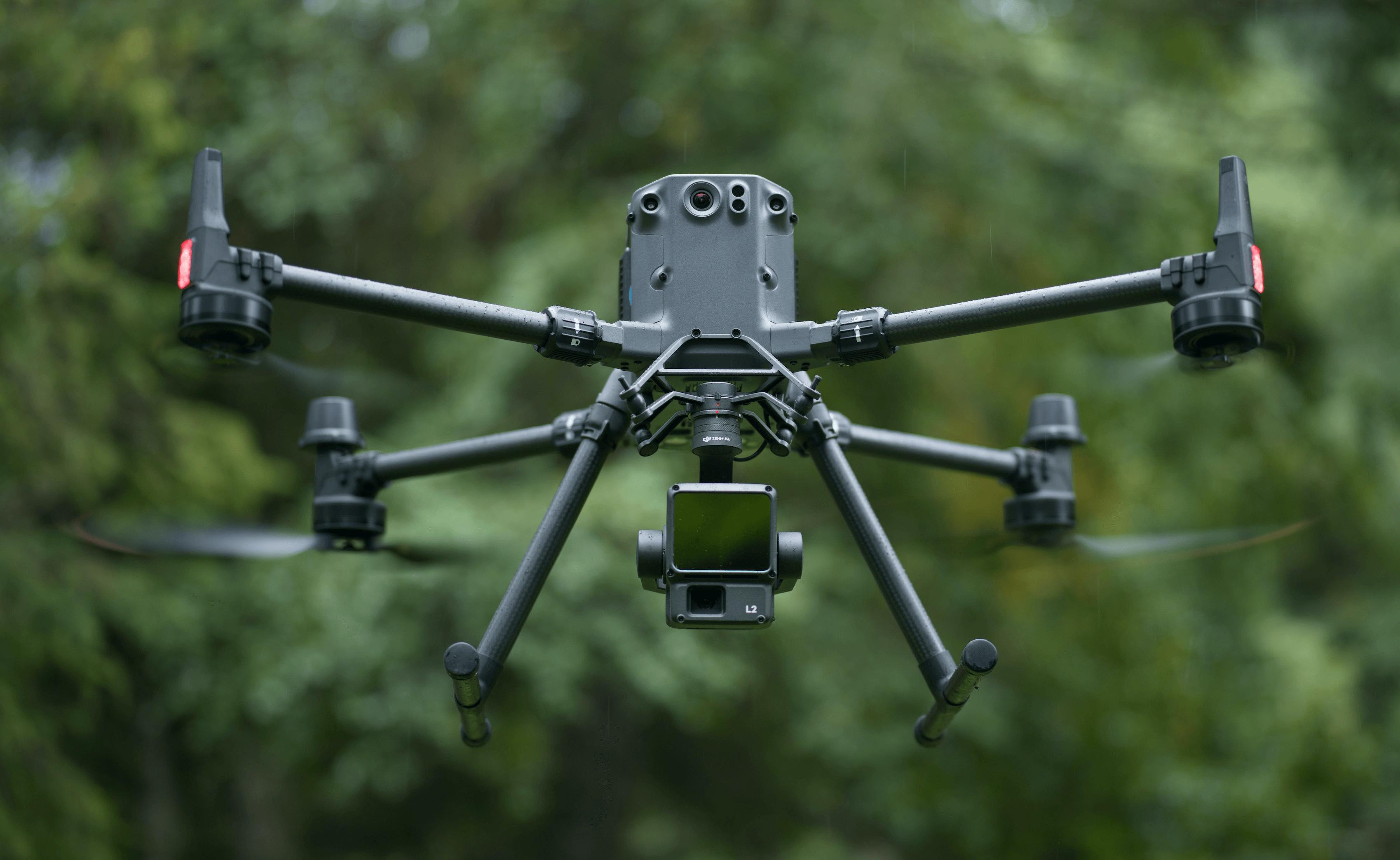
Drones equipped with Lidar sensors are the primary tool for topographical mapping in complex environments. This technology penetrates thick bush and vegetation to provide accurate ground-level elevation data.
Traditional cameras capture only the top canopy of coastal forests or Rift Valley scrub, which renders underlying ground contours invisible to developers. The Photoshoot Kenya field crew deploys enterprise drones with dual-frequency GNSS receivers to ensure data integrity in remote areas.
Lidar payloads emit hundreds of thousands of laser pulses per second to map the precise distance to the surface below. These pulses filter through gaps in the foliage to strike the actual earth and generate a dual-return dataset.
Civil engineers extract the bare earth model from this data to calculate exact cut-and-fill volumes without requiring manual bush-clearing operations. Typical delivery turnaround for processed Lidar data is 72 hours for raw point clouds and five business days for classified datasets.
Deploying equipment like the DJI Zenmuse L2 on commercial drone platforms guarantees high-density point clouds even in the dense vegetation of Mombasa or the Aberdares.
Survey teams process this Lidar data to produce contour lines at 0.5-metre intervals. This provides developers with the exact topographical reality of their investment before infrastructure investment begins.
Aerial Mapping Workflows and Technical Deliverables for Infrastructure
Executing an aerial survey requires strict logistical planning and professional data processing. Flight operators programme automated grid patterns over the target site to ensure optimal image overlap for accurate photogrammetry and Lidar point generation.
Survey teams establish ground control points (GCPs) and measure them with survey-grade GPS rovers to anchor the aerial data to exact geographic coordinates.
Data processing consumes significant computational power and often requires 24 to 48 hours to stitch thousands of individual data points into cohesive models. Photoshoot Kenya standardises this workflow to deliver specific, actionable file formats directly to your engineering team.
This integration ensures that videography Kenya teams and surveyors can collaborate on visual progress reports using the same spatial data.
| Deliverable Type | Primary Application | Standard File Format |
|---|---|---|
| Orthomosaic Map | Master planning and boundary visualisation | GeoTIFF |
| Digital Terrain Model (DTM) | Hydrological modelling and slope analysis | GeoTIFF / DWG |
| 3D Point Cloud | Volumetric calculations and CAD integration | LAS / LAZ |
Practical Applications of Aerial Mapping for Land Development
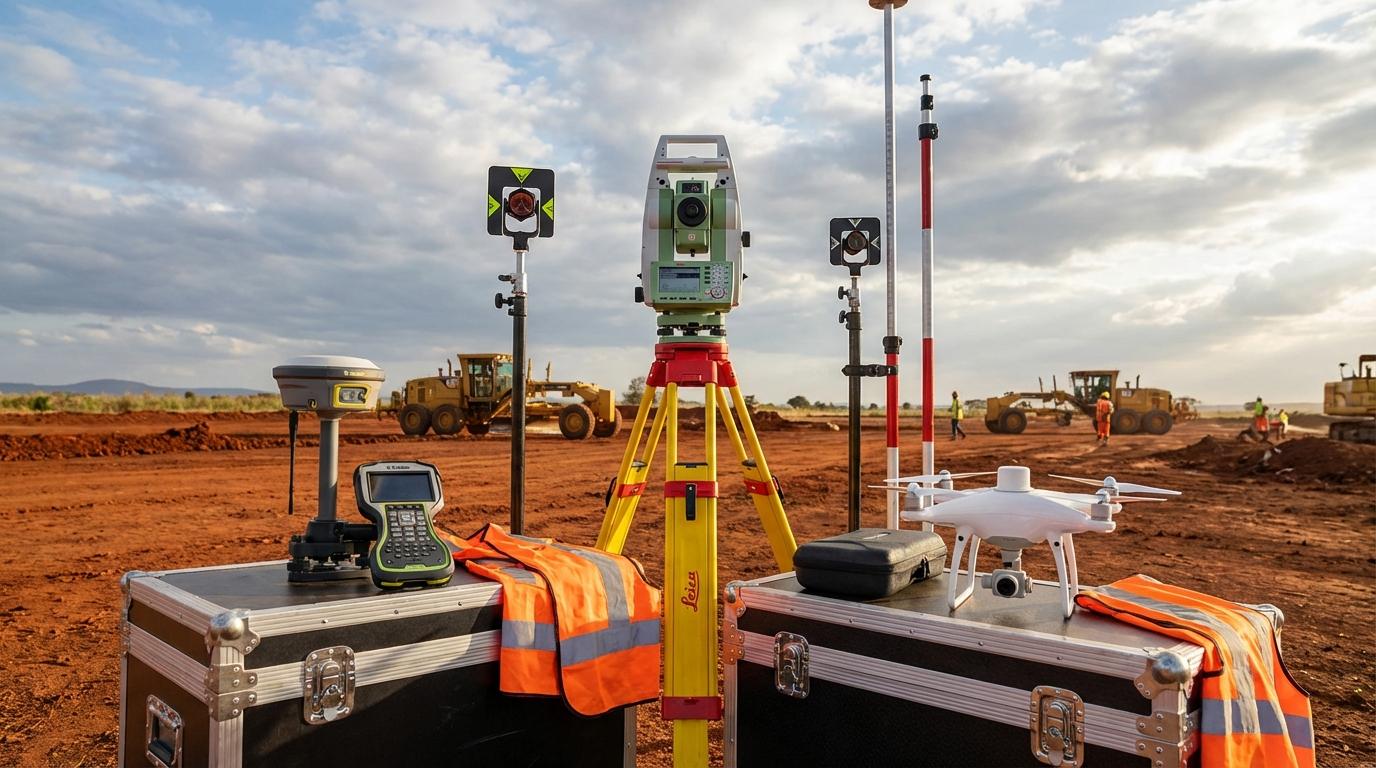
Civil engineering firms deploy drone mapping to accelerate feasibility studies for major transport corridors and water pipeline routing.
Rapidly acquiring corridor mapping data enables design teams to evaluate multiple alignment options without deploying extensive ground crews across difficult terrain. This approach reduces the initial survey timeline by up to 80 per cent compared to traditional methods.
Real estate developers rely on aerial mapping to optimise plot subdivisions in fast-growing urban peripheries like Machakos and Kajiado. Accurate topographical maps dictate the placement of access roads, sewer lines, and retaining walls to ensure maximum land utility.
The technical data supports the creation of marketing materials and architectural visualisations for off-plan sales.
- Volumetric Analysis: Mining and quarry operators calculate exact stockpile volumes and extraction pit depths using periodic drone flights.
- Flood Risk Assessment: Hydrologists utilise Digital Surface Models (DSM) to simulate water runoff and design adequate storm drainage for housing estates.
- Progress Monitoring: Project financiers commission monthly orthomosaic updates to verify contractor milestones against the submitted billing schedule.
GIS Integration and Data Management for Engineering Teams
Delivering actionable data requires compatibility with industry-standard design software. Spatial engineers format all point clouds and elevation models to integrate directly with AutoCAD Civil 3D, ArcGIS, and QGIS.
This standardisation prevents data conversion bottlenecks and allows architects to begin drafting immediately upon file delivery.
Handling the massive file sizes generated by Lidar and high-resolution photogrammetry demands robust data transfer protocols. Photoshoot Kenya delivers primary datasets via secure, high-speed cloud repositories alongside physical solid-state drives for local server archiving.
Project managers receive a web-based viewer link that allows stakeholders to measure distances and inspect the 3D site model directly from their browsers without installing specialised software.
Regulatory Compliance and KCAA Permit Requirements for Drone Mapping
Operating commercial mapping drones in Kenya strictly requires a Remote Operator Certificate (ROC) issued by the Kenya Civil Aviation Authority (KCAA).
Unlicensed flights risk severe legal penalties, equipment confiscation, and project shutdowns. Corporate clients mitigate this risk by contracting fully licensed operators who maintain compliance with all 2026 aviation regulations.
Securing the necessary flight clearances for site mapping involves structured coordination with local authorities and air traffic control.
Operations near restricted zones require specialised permits that take 5 to 14 working days to process. These areas include military bases, national parks, or active flight paths.
Photoshoot Kenya manages this entire regulatory workflow to ensure all mapping missions proceed legally and on schedule.
Technical Capabilities of Photoshoot Kenya for Engineering Surveys
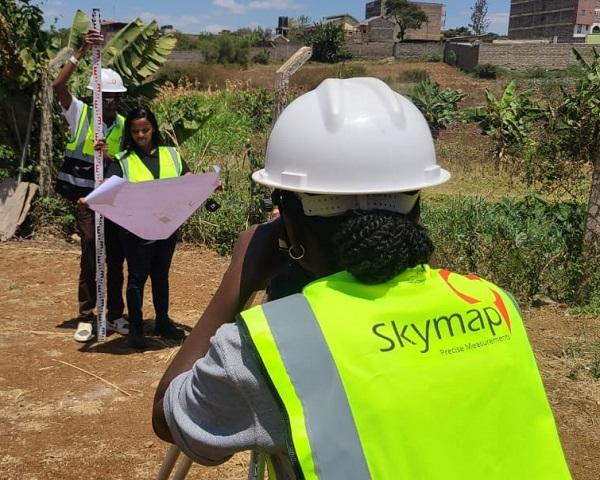
Photoshoot Kenya operates a fleet of enterprise-grade drones equipped with RTK positioning modules and Lidar payloads specifically configured for heavy engineering requirements.
Deploying licensed pilots and qualified spatial data analysts ensures your project receives survey-grade accuracy rather than simple aerial photography. This technical capability translates to reliable data you can use for structural design and financial forecasting.
Clients can book photographer services or mapping consultants through our centralized portal.
Executing large-scale mapping projects requires logistical resilience and rapid deployment capabilities across all 47 Kenyan counties. The operations team manages all KCAA permitting, site reconnaissance, and ground control point placement to provide developers with a complete, end-to-end surveying solution.
Delivering clean, integrated CAD-ready files within agreed timelines keeps your infrastructure project moving from initial feasibility to final construction.
Reach out to our team using our contact form for detailed project quotes and technical consultations.